What is the Difference Between Dental Implants & Veneers?

Dental Veneers and Dental Implants both can give patients a beautiful white smile. Deciding what restorative or cosmetic option works best for you depends on the condition of your teeth. Our staff at Destination Dental in Somerset, NJ provides cosmetic and restorative consultations to all our patients to take a detailed look at your mouth and determine a customized treatment plan that works for you. We listen to your goals and look at all options to give you the opportunity to choose the best one.

So, what is the difference between the two? Typically, Dental Veneers and Dental Implants are used for different reasons. This all depends on how much damage a patient has to their teeth.

What are Dental Implants?

Dental Implants are the leading restorative solution for many patients and one of the most common procedures done today. Implants are permanent and reliable giving patients the feeling that they have natural teeth. Implants are used for patients that have lost a tooth or teeth, have suffered from periodontal disease, or an injury. Dental implants take multiple appointments across a few months to complete.

Implants last upwards of 25 years or a lifetime if taken care for properly. They provide many benefits to patients, and are comfortable in the mouth. Implants allow patients to speak, eat, and function just like they would with natural teeth.

As part of our evaluation process, Dr. Dhara Shah will determine if the patient has enough bone present in the jaw to support the implants. If needed, bone grafting can be done to provide the additional support. During the implant procedure metal posts are placed in the jaw, and these act similar to artificial tooth roots. These posts provide the required support needed for the implants. Once the healing process is complete, an abutment or connector is secured on top of the implants. This allows the crown to be secured on top of the implant.

Crowns are custom made to match the color, size, and shape of your teeth. Temporary crowns are used while the patient waits for the permanent crown to be placed. Practicing good oral hygiene habits and visiting our office regularly will help to keep your implants looking and feeling great.

Contact Our Cosmetic Dentist in Somerset, NJ

Choosing the best option is important, and our team at Destination Dental is here to help give you all of the options available to achieve that bright white smile. We welcome all patients, and strive to always provide quality service our patients can count on.

If you are interested in finding out more about Dental Veneers or are looking to get dental implants in Somerset, New Jersey, please contact Dr. Shah & Dr.  Vithlani to schedule your consultation.
Wisdom Teeth And Orthodontic Recurrence: Is There A Link?

Is there a link between wisdom teeth and having to undergo orthodontic treatment? This is a question that comes up often from patients. And more particularly:

  • How do wisdom teeth affect the position of other teeth?
  • Should we be worried about seeing his wisdom teeth grow?
  • Should we have wisdom teeth extracted, and when?

We are going to answer these different questions here, which many of you ask yourself, whether for yourself or for your children. These questions often come up in patients who have finished their treatment and who sometimes fear posterior movements caused by wisdom teeth.

In this article, we will discuss:

  • Everyone’s fears and questions related to wisdom teeth,
  • Their effect on other teeth and their positioning,
  • And, above all, we will encourage you to consult a specialist orthodontist before making a decision, because the diagnosis is different for each case!

In any case, know it:

There is no causal link between wisdom teeth and orthodontic recurrence. The reasons for recurrence are to be sought on the side of the absence of compression wire or wearing a safety gutter when the wire breaks.

What are wisdom teeth?

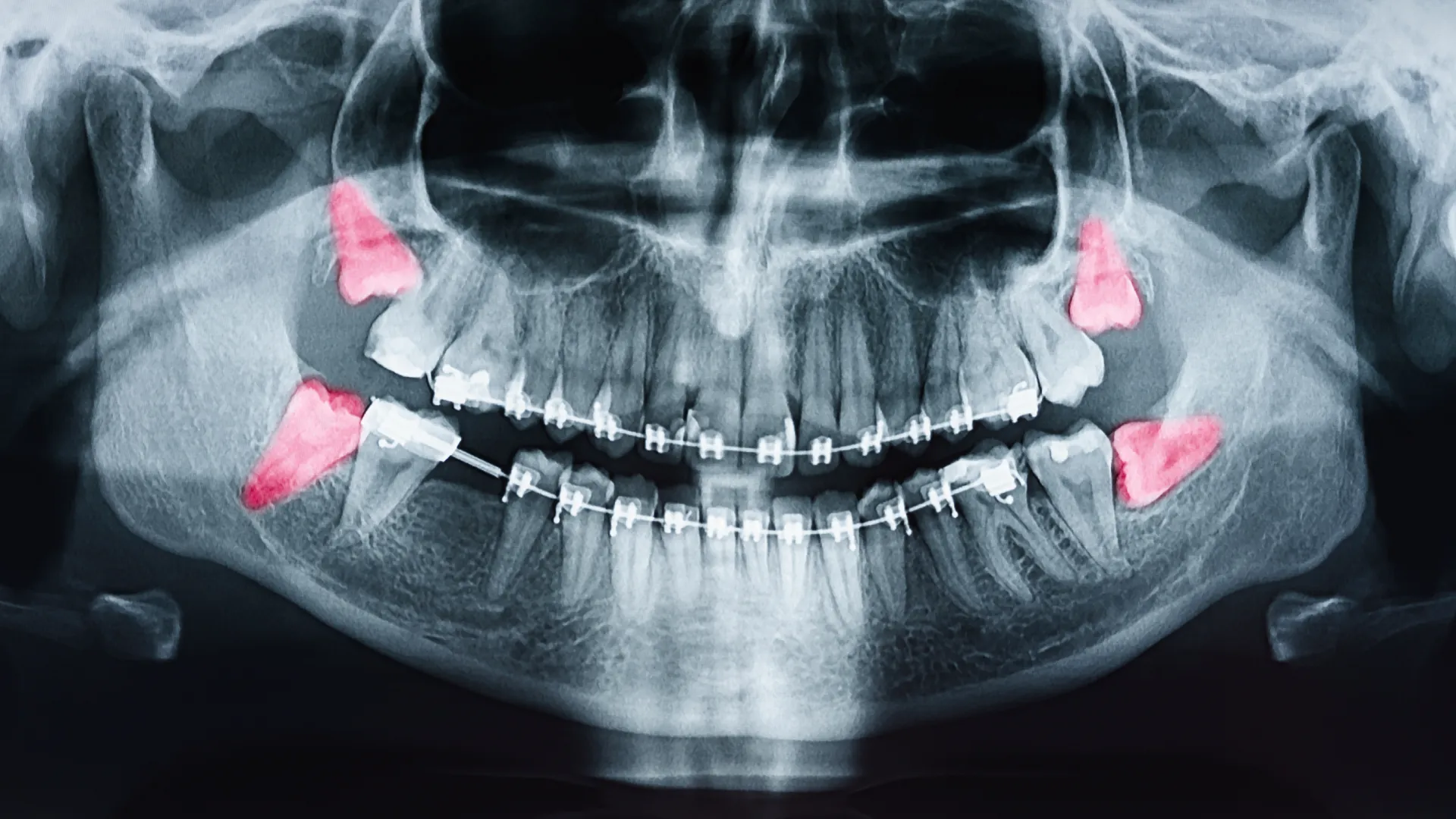
Most adults naturally have 4 wisdom teeth, but about 15-20% of people never develop at least one of these four teeth. What are called wisdom teeth are the third and last molars, which are found at the very bottom on each side of the upper and lower jaws. They are the last teeth to grow through the gums – hence their name wisdom teeth. Wisdom teeth often develop without posing any particular problem. However, sometimes the wisdom tooth does not have enough space to grow and causes severe pain.

Why do we have wisdom teeth?

If anthropologists are to be believed, our wisdom teeth originally evolved to help our ancestors make the most of food in their environment (such as roots, nuts and meats). It took large and powerful jaws to chew this food, and wisdom teeth lent themselves particularly well! Currently, our jaws are smaller and, for many of us, wisdom teeth no longer have enough space. As our diet has changed dramatically over the millennia (with more soft foods), our wisdom teeth are no longer necessary for our survival.

Do wisdom teeth always hurt when they appear?

The short answer is: no, not always! For some people, wisdom teeth will develop painlessly and there will be no impact on the rest of the teeth. In this case, action is unlikely to be taken. However, some people have a very different experience!

Why is the growth of wisdom teeth sometimes so painful?

There are a number of reasons why wisdom teeth can be painful when they come out. Sometimes it’s a space problem: they put pressure on the other adjacent teeth. It can also be due to the fact that the tooth is stuck sideways or under another tooth. In this case, the gum covering the wisdom tooth can become swollen and infected, which can hurt the jaw or the area around the ear.

Do wisdom teeth always hurt when they appear

How long can the discomfort last?

The discomfort of wisdom teeth can last between one and two weeks, but it varies from one individual to another, each case is unique. The pain is rarely static and may increase or decrease at certain times of the day, depending on the stages.

How to reduce the pain of wisdom teeth sticking out?

If you’re having pain while your wisdom teeth are sticking out, one of the most effective remedies is taking over-the- counter pain relievers. Some teething gels can also be applied directly to the area around your wisdom tooth.

Heat and ice can also help relieve pain:

  • You can try putting ice cubes in a cloth and placing it on the flaming side of your face,
  • Or eat an ice cube and hold it over the painful area inside your mouth.

If the wisdom tooth pain is severe or you notice swelling around the face or jaw, go to your dental surgeon urgently, as this indicates that the area around the tooth is infected.


White Teeth Are A Reflection Of Flawless Dental Hygiene

A day drinking too much coffee or smoking more than a pack of cigarettes can follow with yellowed teeth and make your face look duller when you smile. We’ve found pearls to fix that. Affordable and effective solutions.

dental hygiene

Let’s put the ideas on dental whiteners in order

White teeth and well aligned are a charming asset! It attracts, shows that we take care of ourselves and prolongs the youth of our smile. With white teeth, it will impact everyone we meet. 

  • The teeth whitening done at the dentist is unfortunately very expensive and recommended for very damaged teeth. Professionals use a dental laser or lamp therapy; that is why the price is quite high.
  • That’s why there are now various products to use at home. This goes through bleaching pens, powders or whitening kits. They are found both online and in supermarkets for some brands like Colgate Visible White or Crest 3D White.
  • To compete with the prices applied by dentists, we now find, in large cities, specialized institutes or salons.
  • Finally, we can otherwise opt for the natural ingredients that we use in our current consumption. These ingredients allow us to get stain-free and whiter teeth. Just brush your teeth with lemon, baking soda or  charcoal, for example.

This article is here to help you sort through the multitude of offers that are found.

The teeth whitening , how it works?

First of all, there are 2 families in terms of dental lightening. Whether using lambda toothpastes or professional methods you will find on the walk only 2 ways to proceed.

            Deep and surface whitening:

These techniques work on the natural color of your teeth and can save you up to 8 shades. This is possible to realize at a professional but also at home, the only thing that will change will be the price you will have to pay. There is even a price gap. Most treatments use carbamide or hydrogen peroxide but the sophistication of use of these products varies depending on the care you choose. The real difference will be when you combine these ingredients with a whitening light. This is possible at home and will cost you much less than if you use a laser beam lamp treatment at the dentist. The efficiency of this process is due to the fact that the laser beam raises the temperature of the teeth by about 8 degrees C and helps the active agent penetrate your teeth for a better result. However, if you suffer from tooth sensitivity, this process is unfortunately not for you.

Another technique is to first take the impression of your teeth with a mold in which a paste has been arranged. Then, this impression will be sent to the dentist who will make a gutter specially designed to perfectly marry your teeth. You will need to wear your gutter every day for about 2 weeks for 20 minutes a day. The use of whitening strips is a technique that remains effective but less recommended for people suffering from sensitivity of the gums because it can, in rare cases, aggravate them.

            Surface whitening of teeth

There are special kinds of toothpaste in the market to whiten teeth. But in reality, they simply remove the superficial stains that you find on your teeth. The effect of these toothpaste does not last because only the superficial layer of teeth is treated. The polishing agent will act and allow your teeth to be smoother. It acts like when you use the salt hand on the surface of your teeth. However, kinds of toothpaste have a major advantage! Their price is unbeatable. It is preferable to inform you that each person will have a technique that will suit him better, one person will know very positive results with the simple use of toothpaste while for another it will require a complete treatment of the dentist.


The Different Types Of Braces: Which Ones Will Be Right For Me?

The dentists have been part of a revolution that has benefited the lives of people. We are proud to be part of this advance in dental treatments that we know today, because it is now easier for patients to maintain a beautiful, healthy and perfect denture. There is a wide range of choice of braces to correct the denture, this because each patient values ​​different aspects to a greater or lesser extent. According to each of them it will be advisable to use a different type of braces. Our goal is to offer each of our patients the most interesting and appropriate type of brace for the orthodontics that it requires. Although the use of braces has positive aesthetic effects, that is not their main contribution, since the most important thing is that with this dental treatment worse issues are avoided, among which are the following:

  • Tooth decay
  • Gum disease
  • Tooth loss
  • Poor chewing and speech.
  • Jaw problems, among others.

Now that we are thinking about the idea of ​​wearing braces to correct our smile, we are completely determined to schedule appointment with dentists to begin orthodontic treatment. It is necessary to distinguish between the different types that exist because although the apparatus used is apparently similar, in reality, when we compare one treatment, we find many singularities. The differences lie mainly in the material they use, as well as the technique used for their preparation. Basically, all of them fulfill the same function, but some may be more comfortable or aesthetic than others.

Metallic Braces

They are the most resistant and are those that offer greater durability in clear advantage over the rest of the braces. They resist much better than the ceramics the force exerted during chewing. They fall less and transmit the forces better to the teeth, so dental treatment will go faster. The drawback is that they are less aesthetic.

Sapphire and Ceramic Braces

These are the most aesthetic braces, although these dental devices can extend about four to five months of treatment. They hide more, to the extent that it does not seem that we have braces on our teeth. They are not stained with food and their transparency favors the aesthetics of the smile. In the same way, ceramic braces are not stained with food and are visibly very appropriate. The Dentists comment that both the metal and sapphire braces and the transparent ones have a similar durability, only slightly higher in the case of the former.

Lingual braces

This type of braces can also be applied in a dental clinic and the option is to put the braces on the inner side of the teeth, which is known as lingual orthodontics, lingual braces or internal braces. They are the only 100% invisible braces. For this reason, they are never in sight – only the patient will know that he has them on. In this case they are designed in a laboratory, carrying out a special study on the case, since it is a type of orthodontics that employs high technology and has a maximum degree of efficiency because it is fully customized. Its size is smaller than any other and all these characteristics make the treatment very effective. In most cases they are the most expensive.

What are the pros and cons of dental implants?

Things You Should Know Before You Get Dental Implants

What Are Dental Implants?
Dental implants allow dentists to mount replacement teeth. They are surgically placed into jawbones. Implants, unlike dentures, do not come lose. While getting dental implants is generally a safe procedure, the prospect of a dental implant can be intimidating. As such, it is beneficial to explore the various pros and cons of dental implants before pursuing further.

The Pros of Dental Implants
1. Dental Implants Protect Teeth from Damage
Dental implantation occurs over several steps. At the end, the implant has fused to the bone. Unlike dental bridges, dental implants do not rely on teeth for support and are less likely to damage teeth over time. This leads into the second advantage of dental dams.

2. Dental Bridges and Dentures Are Uncomfortable and Often Painful
People often experience difficulty chewing or talking when wearing dentures. Further, many individuals have complained about a distinct and recognizable clicking sound associated with dentures. To contrast, dental implants are incredibly similar to real teeth, in both look and function.

3. Simple Oral Hygiene
Due to their similarity to real teeth, dental implants can be cared for using simple and standard oral hygiene methods. Such convenience is often not afforded by dental bridges and dentures.

The Cons of Dental Implants
Every procedure comes with associated risks and disadvantages. Despite the benefits of dental implants, there are some noteworthy cons to discuss.
1. Dental Insurance will not Normally Cover Dental Implants
Dental implants are an expensive procedure, made all the more costly by the lack of much needed coverage. However, dental insurance covers little in comparison medical insurance and many view the cost of dental implants as worth the sacrifice.

2. The Success of Implantation Depends on Health
To receive dental implants, you must have healthy bones and gums. Further, the liklihood of implantation is reduced in smokers and other demographics with poor dental health. Individuals must also commit to keeping implants healthy and clean. While day-to-day cleaning is simple, it must still be meticulous and regular visits to the dentist is often, also, needed.

Conclusion
Medical procedures, as a whole, can be confusing and hard to navigate. If you think you need a dental exam, or would like to inquire more about this procedure, call our office today and one of our helpful staff members will be happy to assist you

Is it a good idea to replace Amalgam fillings with composite?

Even if you brush twice a day and get routine dental cleanings, cavities can still occur. If you’re between the ages of 25 and 45 and do have fillings, they are probably amalgam.

Dental amalgam is a metal that’s used to fill in large cavities, usually in the back teeth. While there’s no scientifically proven evidence that you should remove amalgam, there are a few reasons why you may want to consider replacing them with composite-based fillings.

Your Filling is Loose

If you’ve had your fillings for a long time, it’s possible for them to come loose. If this happens, bacteria can get inside your teeth and cause an infection. If you feel like your filling is loose, you need to see your dentist as soon as possible and have it replaced.

Keep in mind that composite fillings actually bond to teeth making them stronger and less likely to loosen or crack over time. In addition, composite fillings may also reduce tooth sensitivity, something that’s seen quite often in patients with older amalgam fillings.

Possible Allergic Reaction

If you suffer from sensitivities or allergies, amalgam may not be suitable for you. Since amalgam fillings are a mixture of mercury silver and tin, it might best to replace them with composite-based fillings. Speak to your dentist about what type of fillings would be best.

Aesthetics

If you’re not comfortable smiling because of your amalgam fillings, replacing them is a viable option. Composite fillings are usually invisible to the naked eye, which means they’re not noticeable when you talk or laugh.

Longevity

Both amalgam and composite fillings are long-lasting. The difference between the two is that amalgam can last 10 to 15 years whereas composite filling may only last five to 10 years. That’s not saying that amalgam fillings are better than composites. In the end, it’s a matter of preference as well as the depth of the cavity and its location.

Final Thoughts on Fillings

If you’re concerned about your amalgam fillings, talk to your dentist. Depending on your dental picture and the extent of your cavities, they’ll determine the best way to treat your fillings.

Schedule Your Appointment